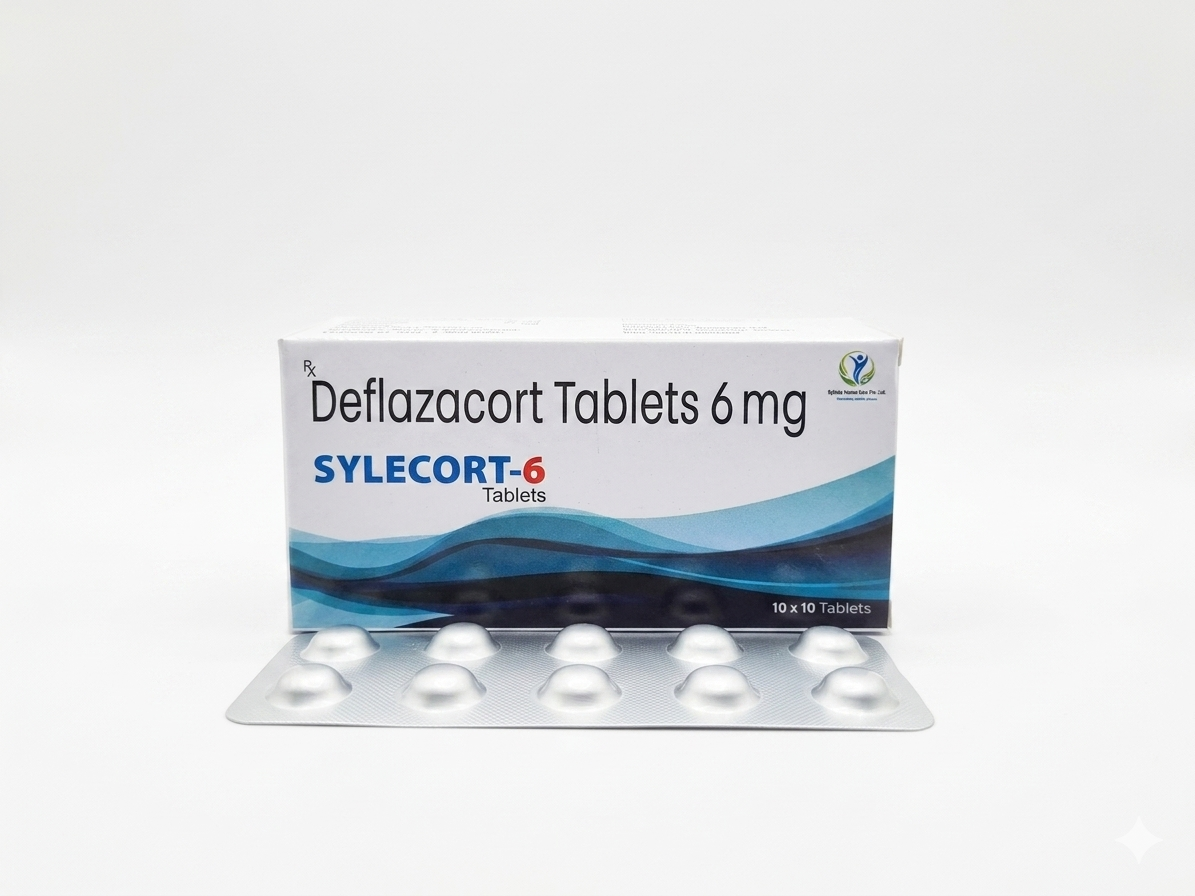
Here is the complete breakdown for SYLECORT-6, which contains Deflazacort 6 mg.
Deflazacort is a corticosteroid (glucocorticoid). It is a highly effective anti-inflammatory and immunosuppressant medication. Compared to older steroids like prednisolone, deflazacort is widely preferred because it generally shows a lower tendency to cause bone thinning (osteoporosis) and sugar metabolism disruptions.
Description
Here is the complete breakdown for SYLECORT-6, which contains Deflazacort 6 mg.
Deflazacort is a corticosteroid (glucocorticoid). It is a highly effective anti-inflammatory and immunosuppressant medication. Compared to older steroids like prednisolone, deflazacort is widely preferred because it generally shows a lower tendency to cause bone thinning (osteoporosis) and sugar metabolism disruptions.
1. How It Works (Mechanism of Action)
Deflazacort acts deeply at the cellular level to manage severe immune responses:
Powerful Anti-inflammatory: It inhibits the production and release of chemicals (like prostaglandins and leukotrienes) that cause swelling, redness, pain, and heat in body tissues.
Immunosuppressive Action: It modifies or suppresses the body’s overactive immune system response. This is essential when the immune system mistakenly attacks its own healthy cells (autoimmune conditions) or reacts severely to external triggers.
2. Key Benefits & Clinical Uses
Because of its strong anti-inflammatory properties, doctors prescribe SYLECORT-6 across multiple medical fields:
Severe Allergic Conditions: Used to rapidly control acute, severe allergic reactions, asthma flares, and chronic skin conditions like severe eczema or psoriasis.
Inflammatory Joints & Muscles: Highly effective in treating painful, swelling joint disorders like Rheumatoid Arthritis, osteoarthritis flares, and gout.
Autoimmune Diseases: Used to manage conditions where the immune system misbehaves, such as Systemic Lupus Erythematosus (SLE) or certain inflammatory bowel conditions.
Respiratory Conditions: Reduces severe swelling in airways during severe bronchitis, asthma attacks, or other inflammatory lung diseases.
Neuromuscular Disorders: Widely utilized in specific muscle disorders like Duchenne Muscular Dystrophy (DMD) to help retain muscle strength.
3. General Dosage & Administration
⚠️ Critical Clinical Rule: Corticosteroids are high-potency prescription medications. The dose and duration must be strictly tailored by a physician based on the specific condition.
Standard Dose: Depends completely on the condition being treated. For adults, it can range from 6 mg up to 90 mg per day in acute cases.
Administration: It is best taken in the morning after breakfast/food to prevent stomach upset and to mimic the body’s natural daily steroid rhythm.
The Tapering Rule: If taken for more than a few days, never stop this medicine abruptly. The dose must be gradually tapered down under a doctor’s guidance to avoid withdrawal symptoms (acute adrenal insufficiency).
4. Side Effects & Long-Term Precautions
Short-term use is usually very safe. However, prolonged or high-dose use of corticosteroids requires careful monitoring due to potential side effects:
Short-Term/Common: Increased appetite, mild weight gain, mood changes, or stomach irritation.
Long-Term Risks: Increased susceptibility to infections, elevated blood sugar levels (steroid-induced diabetes), fluid retention, and gradual thinning of bones.
💡 Key Medical Precautions
Infections: Because it suppresses the immune system, the patient should avoid close contact with anyone who has contagious infections (like chickenpox or measles).
Comorbidities: Extra care and monitoring are needed if the patient has a history of high blood pressure, diabetes, stomach ulcers, or kidney/liver issues.